
Showing posts with label Film Review. Show all posts

Thursday, August 25, 2011

Martha Marcy May Marlene and Me

This past week, I went to an advanced screening of Martha Marcy May Marlene. For months, the film world has been aflutter with news of this festival darling. It is one of the few films to be screened at the "Big 3" -- Sundance, Cannes, and Toronto (September 8-18).

Martha Marcy May Marlene is about a young girl, Martha, who escapes an abusive, cult-ish "family" and moves in with her sister and brother-in-law. Transitioning from the communal community that promoted living in the moment, to the excessive home of a yuppie couple proves extremely difficult for Martha, who went by Marcy May and Marlene in the cult. The title of the film describes it perfectly in that Martha and Marcy May/Marlene, two very different people, are bonded together. At all times, each one is trying to push the other out, but remnants of a past life are constantly forcing themselves into the present.

The film, written and directed by newb Sean Durkin, stars fellow novice Elizabeth Olsen. Upon entering the scene, Olsen was identified as the younger sister of twin moguls Mary-Kate and Ashley. However, after this film opens commercially, I very much doubt that her only claim to notoriety will be her famous siblings. Beyond "solve any crime by dinnertime," this was one of her first films and it was one of the best (if not the best) performances I've seen all year. Olsen flawlessly evokes the pain, embarrassment, and inner-conflict of Martha, and the confusion, devotion, and trepidation of Marcy May. Her performance is multi-faceted and refreshing.

Equally accomplished is Sean Durkin's screenplay and direction. In a Q&A after the screening, Durkin said that he researched several cults, including but not limited to the Manson Family, in preparation for this movie. The film is both believable and jarring. Due to brilliant editing and organization, the story moves seamlessly from the present to the past and back. Sporadically throughout the film there are episodes which may or may not be hallucinations. In the Q&A session, Olsen praised the film becasue "everything's left up to interpretation. Nothing's spoon-fed to you." Though this uncertainty upset some of my fellow audience members, it intrigued me because it added another element of mystery to an already unfamiliar situation.

Martha Marcy May Marlene, which also features Hugh Dancy, Sarah Paulson, and John Hawkes, is an excellent film and a launching pad for two very bright careers. I would especially keep an eye out for Ms. Olsen, who has several more titles coming out in the near future.

Wednesday, August 17, 2011

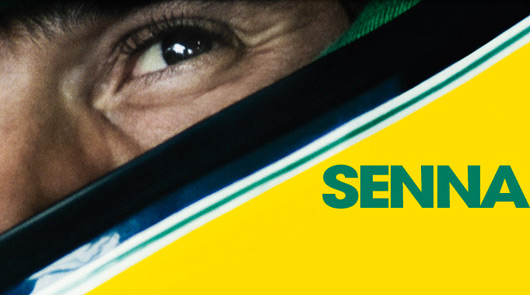
The Ledendary Senna


Earlier this week, I attended an advanced screening of the new documentary Senna. This film, directed by Asif Kapadia, depicts the career of arguably the best driver in Formula One history, Ayrton Senna. Of course, some of the impact of this film is lost on those who do not follow F1 racing, and even more on those who, like myself, don't really know the difference between F1 and Nascar. However, it is a testament to this film that, even without any prior knowledge or interest, I was able to connect with and find inspiration in the documentary.

This documentary is a masterpiece. It is constructed like a fictional piece. There are no talking heads; Kapadia uses the audio of interviews over archival footage. The amount of footage collected for this documentary is amazing as is the variety of sources, from news footage to home videos to in-car footage that shows the audience exactly what Senna saw as he was driving. These combined factors made the film captivating; the unique footage was incredible and the lack of face-to-face interviews never disconnected the audience from the story, which talking heads often do.

I also say that the film is similar to a fictional piece becasue it does so much to build the character of Ayrton Senna, so that an audience of non-racing fans have something to grab onto. Senna, who looks like the test-tube baby of Tom Hardy and John Cassavettes, is an ambitious young driver from Brazil. Kapadia puts special emphasis on the relationship between Senna and his frenemy and foil, fellow racer Alain Prost. When Prost is all about playing politics, Senna is all about the racing. They begin as friends then turn into nemeses and finally seem to end up at a healthy "shaking hands and smiling for the crowd." It's a thread throughout the movie, a friend/rival relationship that we can all relate to.


Right?!?!

Kapadia depicts Senna as a benevolent Achilles-type character. He travels around the world, but never forgets his roots. To the people of Brazil he is a hero, a glimmer of joy in a tumultuous political and social period. In his career, he always strives to be the best and almost always achieves his goals. But like Achilles, he eventually begins a race that he knows he may not finish (in that particular race, there had already been three accidents and one death due to new F1 vehicle regulations). And like Achilles and his un-dipped heel, Senna dies in a horrific crash with only one injury--a blow to the head, which would have been harmless had it hit six inches higher or lower. The similarities between the Greek legend of the battlefield and the Brazilian god of the racetrack are striking. When Senna gets in the car for the final time, you know he is not going to get out. And when he dies, you feel as though the world has lost a hero.

And this is from someone who knows nothing about racing...

Friday, July 29, 2011

Film Review: The Devil's Double

We all know the name Saddam Hussein. The name reminds my generation of a conflict that has engulfed much of the world for almost half of our lives. For others, it brings back memories of not only this war but also another in the early 90s. Much less known is the name Uday Hussein, Saddam’s eldest son. However, some say that Uday was just as dangerous, a veritable psychopath who played with anyone he chose. Uday became notorious for brutally punishing his friends, girlfriends, and even athletes who failed to perform. People closest to him report watching him rape and maim women on multiple occasions.

Enter Latif Yahia. Due to his resemblance to the President’s son, the Iraqi soldier was chosen to be Uday’s body double. As such, Latif had to melt into Uday’s life, not only bearing witness to Uday’s psychotic behavior without the power to stop it, but also becoming Uday in the public sphere. The new film The Devil’s Double, directed by Lee Tamahori, starring Dominic Cooper, and based on Latif’s book by the same name, tells the story of Latif’s life as Uday’s “twin brother.”

You may remember Cooper from Mamma Mia (2008) and The History Boys (2006). In this film, he plays three roles: Latif, Uday, and Latif pretending to be Uday, which is another character all together. For Cooper, this role was a huge jump from his past roles of brooding bad boy or jet-skiing golden boy, so I was skeptical at first. However, from the opening credits, it was clear that Cooper had risen to the challenge and that this would be a career-making performance. His portrayal of Latif is accomplished; his portrayal of Uday is outstanding.

One of the first scenes depicts Latif being delivered to Uday at his palace. The two stand face to face, one laughing manically like a hyena, the other staring soberly in disbelief. From there, Latif is jailed, beaten, forced to get plastic surgery, and made to relinquish all rights to his former identity. Much of what happens in the film seems over the top and extremely exaggerated. Uday disembowels his father’s friend at a party. The next morning, his henchmen dump the strangled body of a 14-year-old girl he had picked up as she was walking home from school. Later, he rapes and beats a woman on her wedding day, shaming her so greatly that she jumps off the balcony, dying on the patio in the middle of her waiting wedding reception.

These things may seem exaggerated, but, in fact, Uday’s actions are toned down for the movie. In the film, Latif survives two assassination attempts on Uday. In actually, he survived more than ten. In an interview with Latif after Uday’s death, he says that he once watched Uday mutilate a woman until she was a “hunk of meat.” Sadly the horrors in the movie pale in comparison to reality.

The world into which this film takes you is terrifying. In many films in which the content is foreign to Americans, the director must establish the rules of the environment, so that the audience can understand the gravity of what is happening. In this film, Lee Tamahori establishes that there are no rules, and that is why Latif’s world is so terrifying; accountability for Uday is virtually nonexistent with no safe haven for those he wishes to harm.

Latif’s is an amazing story and Tamahori’s is a wonderful film. Go see for yourself.

Sunday, July 3, 2011

I Think I Hated That Movie

Over the past month, I have found myself walking out of several movie theaters with my final commentary on the film being "I think I hated that." The most vivid instances of this disdain were after seeing The Tree of Life, Green Lantern, and the recent Hanks/Roberts collab, Larry Crowne. Unfortunately, these were all movies that I had to pay for (whereas many, I see for free through the internship). My mom suggested that it may be karma evening the scales. Whatever it is, I don't like it.


1. THE TREE OF LIFE -- I saw The Tree of Life shortly after is came out in Philadelphia. I had no real idea what to expect because it had done so well at Cannes, but, from watching the trailers, I could not figure out what the film was about. Then I learned that the reason for that was that the film is hardly about anything. It was artsy to the extreme. There were metaphors, whispered lines, and Sean Penn really earning his money by sitting in chairs and looking out windows. I must say that it was a beautiful film. It showed the full capabilities of film and utilized a new storytelling style. The cinematographer, Emmanuel Lubezki, should be crowned king of cinematographers. The film is very high art, which makes it extremely inaccessible to most people, which explains the "ugh" reaction from half the audience. I didn't really feel for any of the characters, which severely lessened my investment in the film. Further, Malick suggested a whole bunch of metaphors that he never wrapped up or connected to the other storyline. For these reasons, I appreciated The Tree of Life, but strongly disliked it.


2. GREEN LANTERN -- I disliked The Tree of Life becasue it was high art, an acquired taste, you might say. Green Lantern, I disliked for it's lack of taste. For one thing, I severely dislike Blake Lively, in no small part because of her annoying blonde leggy-ness. However, my adoration for Ryan Reynolds outweighs said ill-feelings. Though Reynolds was delightful, the film in general was just "too." Too many special effects, especially when it seemed that Reynolds was doing a "head-in-the-hole" picture becasue his suit and the background were both computer generated, too much make-up on Peter Sarsgaard, making him look laughable rather than menacing (although he did the maniacal act well), too many hokey morals, like when fear is literally ruining the world and courage is the only solution, and finally, too many butt and boob centric (and work inappropriate) outfits for Lively. Although the same could be said for Reynolds, since the studio could have saved millions on special effects by simply painting Reynold's abs green. I know that this common fare for super hero movies, but so many comic adaptations -- particularly X-men and Batman -- have added a little something extra. I wish this had too.


3. LARRY CROWNE -- In the credits for Larry Crowne, I learned that (1) Tom Hanks directed it and (2) Nia Vardalos co-wrote it. I took these as good signs since I enjoy That Thing You Do and My Big Fat Greek Wedding, and it's always nice to see mentor-protegee type teams staying together. But then the movie sucked. The only thing I liked from it was the scenes of the Vespa-gang, which I thought was cute. However, the rest of it was kind of horrible. Almost every character was annoying, most of all Julia Roberts and GuGu Mbatha-Raw. Even Hanks, who was fairly likable, wasn't someone you'd want to be friends with in real life. Further, the entire film was completely improbable, from the 24/7 yard sale hosted by Cedric the Entertainer and Taraji P. Henson (the best characters in the movie), to Wilmer Valderrama feeling threatened by Tom Hanks, to the Hanks-Roberts coupling even though they had zero chemistry and no more than three conversations. This movie will probably fade and finally disappear forever, which would probably be better everyone.