I know, I know, you've been thinking for some time now that your film education isn't quite complete without a familiarity with Italian cinema. As I said in past posts, I recently fell in love with Italian cinema, so it would be my pleasure to suggest a few films to get you started...
1. The Bicycle Thieves (Vittorio de Sica, 1948) -- Okay, so you knew this one was coming, but really -- no education on Italian film or even Italy itself is
 complete without The Bicycle Thieves. It is the story of a man in dilapidated post-war Rome whose livelihood depends on his bicycle, which he needs for his job. However, his bike is stolen within the first twenty minutes and the rest of the film follows him and his young son Bruno as they try to find it. This film is also has the key hallmarks of Neo-Realism, as it incorporates social issues, on-location shooting, and non-actors. The title in Italian is Ladri di Biciclette, which means Bicycle Thieves. This is actually a much more accurate and appropriate title. Once you watch the film, you'll know why...
  2. La Dolce Vita (Federico Fellini, 1960) -- Possibly Fellini's most famous film, La Dolce Vita is a commentary on Italian life after the economic miracle of the 1950s, when the standard of Italian living shot up. The film centers around a journalist, played by Fellini's "alter-ego," Marcello Mastroianni and his sordid affairs with the rambunctious Roman in-crowd. Known internationally, La Dolce Vita depicts a time in which Italian sensibilities shifted and displays the Felliniesque artistry that influenced later generations of filmmakers.
 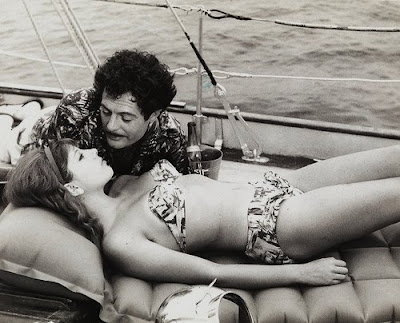 3. Divorce, Italian Style (Pietro Germi, 1961) -- Also starring Marcello Mastroianni, this film about a man trying to divorce his wife takes place before divorce was legalized in Italy. Therefore, his only option is to kill his wife in a fit of passion and partake of the archaic Honor Laws, which state that if someone kills their spouse after finding him or her cheating, jail sentences are minimized. Mastroianni is wonderful as an over-the-top caricature of himself in this hilarious social commentary on the backwards nature of the legal system and Sicilian social codes.
  4. Cinema Paradiso (Giuseppe Tornatore, 1988) -- Cinema Paradiso is a film about people who love films. Set in Sicily, it tells the story of a young man and how he came to admire the cinema with the guidance of his mentor, a theater projectionist named Alfredo. The film displays the beauty of the Sicilian landscape and also shows the changes in the island over the main character's lifetime. It is a poetic and beautiful tribute to filmmaking.
 5. The Best of Youth (Marco Tullio Giordana, 2003) -- This film/TV mini series is six hours long and
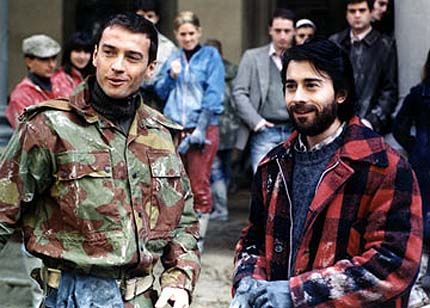 spans about forty years of Italian history. It follows brothers Nicola and Matteo through their adult lives, as they take very different paths both politically and personally. The film takes place all throughout Italy and has a soap opera like tone, which will keep you hooked. The Best of Youth is a crash course in modern Italian history and depicts the changing sentiments throughout Italian society.
 So there are just a few movies I would suggest to get you started. If you enjoy these, the fun doesn't have to stop! There are hundreds more that you would like. If there is a special place in your heart for Italian cinema as there is in mine, you may also like to check out my discussions on select films on my "Cinema Italiano" page, coming soon. Until then, Ciao!